
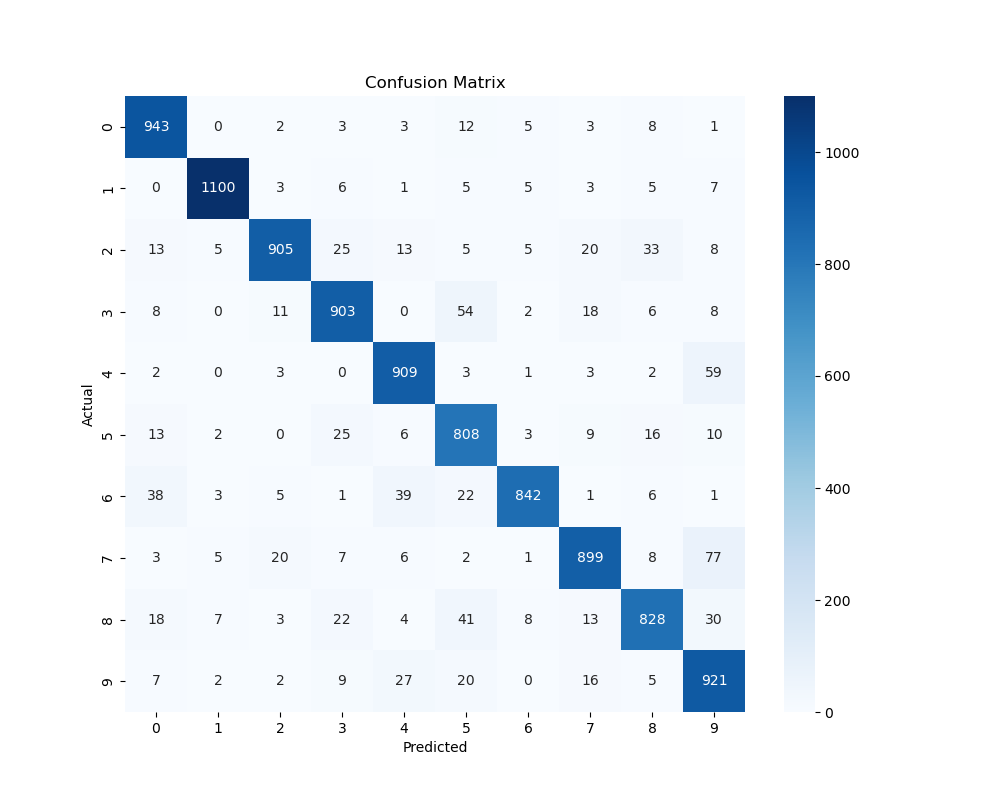
^above is my classification approach trained for 10 epochs
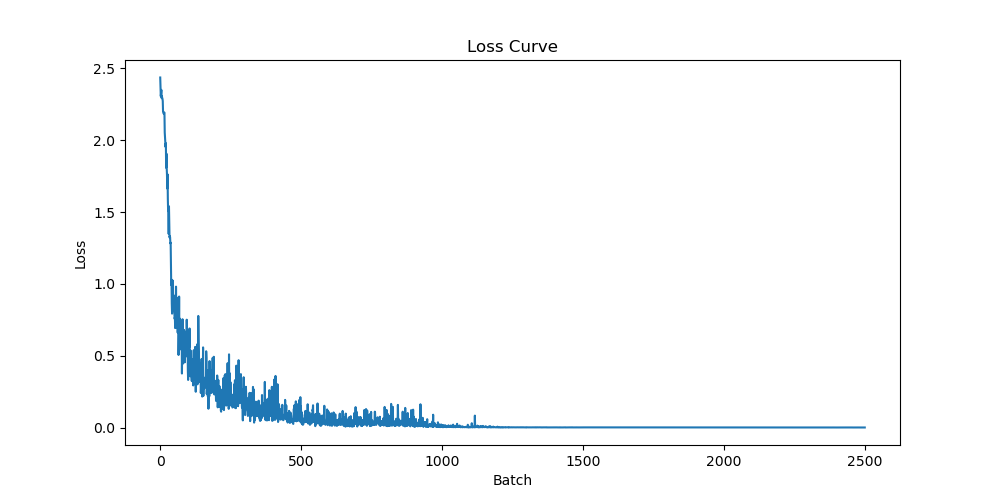
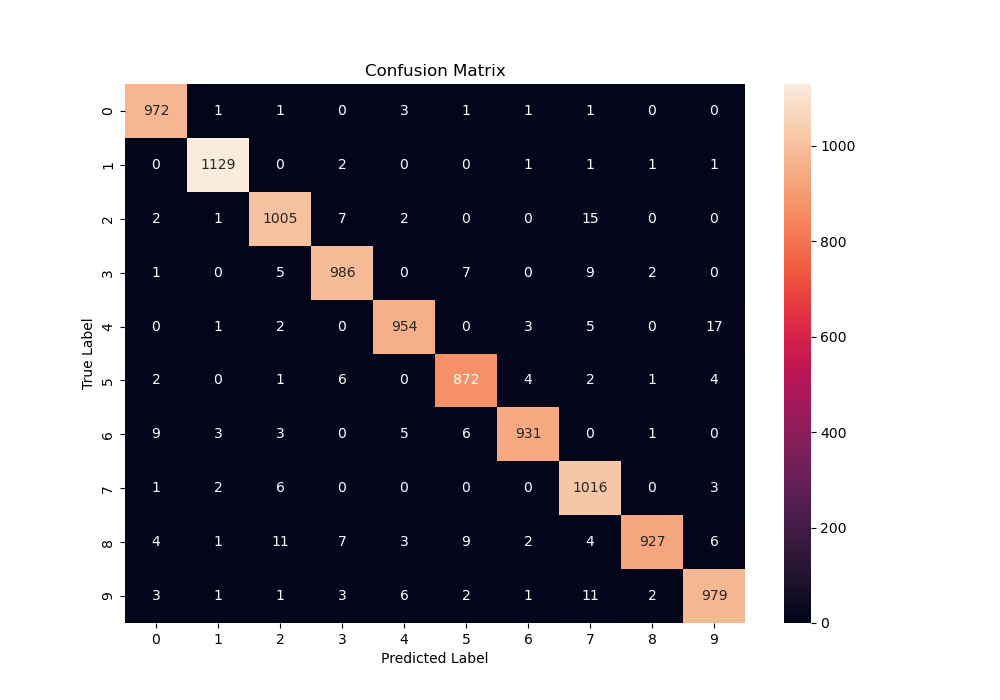
^the same network trained for 200 epochs, >98% accuracy
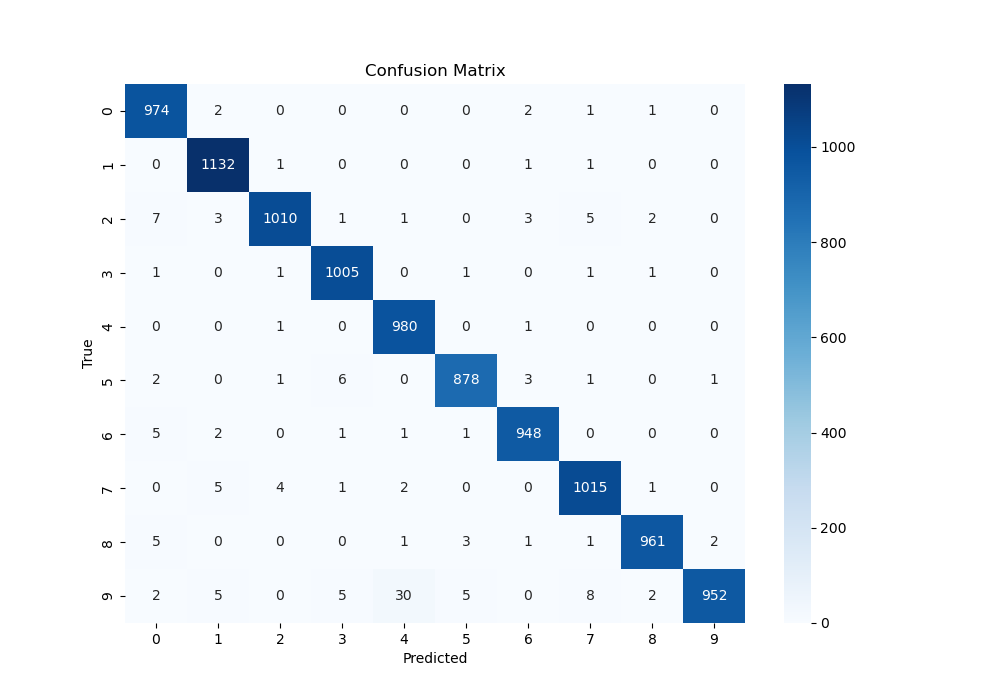
^a much simpler CNN for 50 epochs…. hmm
The classification of handwritten digits stands as a foundational problem in machine learning and computer vision, serving as a benchmark for developing and evaluating various algorithmic approaches. Its significance extends to practical applications such as postal code recognition, bank check processing, and optical character recognition (OCR) systems. The MNIST (Modified National Institute of Standards and Technology) dataset, comprising 70,000 grayscale images of handwritten digits (0-9), is overwhelmingly the most common benchmark for this task due to its simplicity, clean data, and wide availability (Ramachandran & Biswal, 2023).
 Figure 1. An example of a handwritten digit ‘5’ from a classification dataset, illustrating the variability inherent in human handwriting (Ramachandran & Biswal, 2023).
Successful Approaches and Working Mechanisms
The classification of handwritten digits has seen remarkable progress, primarily driven by advancements in neural networks (NNs) and deep learning. Early approaches included k-Nearest Neighbors (k-NN), Support Vector Machines (SVMs), and simpler multi-layer perceptrons (MLPs). However, deep learning architectures, particularly Convolutional Neural Networks (CNNs), have demonstrated superior performance, achieving near-human or even superhuman accuracy rates exceeding 99% on the MNIST dataset (Khare, 2021).
Neural networks learn to extract features directly from the raw pixel data, effectively identifying patterns and shapes that correspond to specific digits. Deep neural networks (DNNs) leverage multiple hidden layers to learn hierarchical representations, where early layers detect basic features like edges and corners, and deeper layers combine these into more complex patterns like loops and lines characteristic of individual digits.
 Figure 2. A conceptual representation of a neural network, a key architecture for handwritten digit classification (Analytics Vidhya, 2017).
More advanced architectures, such as recurrent networks or models incorporating variational autoencoders (e.g., Recurrent MMV networks), have also been explored, offering alternative ways to process sequential information or generate robust feature representations, sometimes pushing performance boundaries further (Keuninckx, 2023).
Figure 3. An illustration of a recurrent MMV network applied to MNIST handwritten digit classification, showcasing a more complex network architecture (Keuninckx, 2023).
Biggest Troubles and Failure Points
Despite high accuracy rates, digit classification is not without its challenges and failure points:
- High Variability in Handwriting: The primary source of difficulty lies in the vast stylistic differences among individuals’ handwriting. Digits can vary significantly in slant, thickness, size, stroke order, and even the number of strokes. This inherent variability makes it challenging for models to generalize across all possible writing styles.
- Ambiguity Between Digits: Certain digits can be easily confused, even by humans, due to their similar visual characteristics or poorly formed strokes. Common confusions include ‘1’ and ‘7’, ‘4’ and ‘9’, ‘3’ and ‘5’, ‘0’ and ‘6’ or ‘9’ (if the loops are not clearly closed).
- Noise and Distortion: Real-world handwritten digit images may contain noise, smudges, broken strokes, or be captured under varying lighting conditions, degrading image quality and making accurate classification harder.
- Limited Training Data for Edge Cases: While MNIST is extensive, it may not encompass every conceivable variation or peculiar style of writing. Models might struggle with digits that are highly unusual or represent rare edge cases not well-represented in the training set.
- Overfitting: Complex models, especially deep neural networks, can sometimes overfit to the training data, performing excellently on seen examples but poorly on unseen, slightly different samples. Regularization techniques are crucial to mitigate this.
- Computational Resources: Training very deep and sophisticated neural networks requires substantial computational resources (e.g., powerful GPUs), which can be a barrier for some researchers or applications.
Is There a Best Network?
While the concept of a single “best” network can be subjective and context-dependent, for the task of handwritten digit classification on datasets like MNIST, Convolutional Neural Networks (CNNs) are widely considered among the most effective and robust architectures. Their ability to automatically learn spatially hierarchical features directly from raw image data without extensive manual feature engineering gives them a significant advantage.
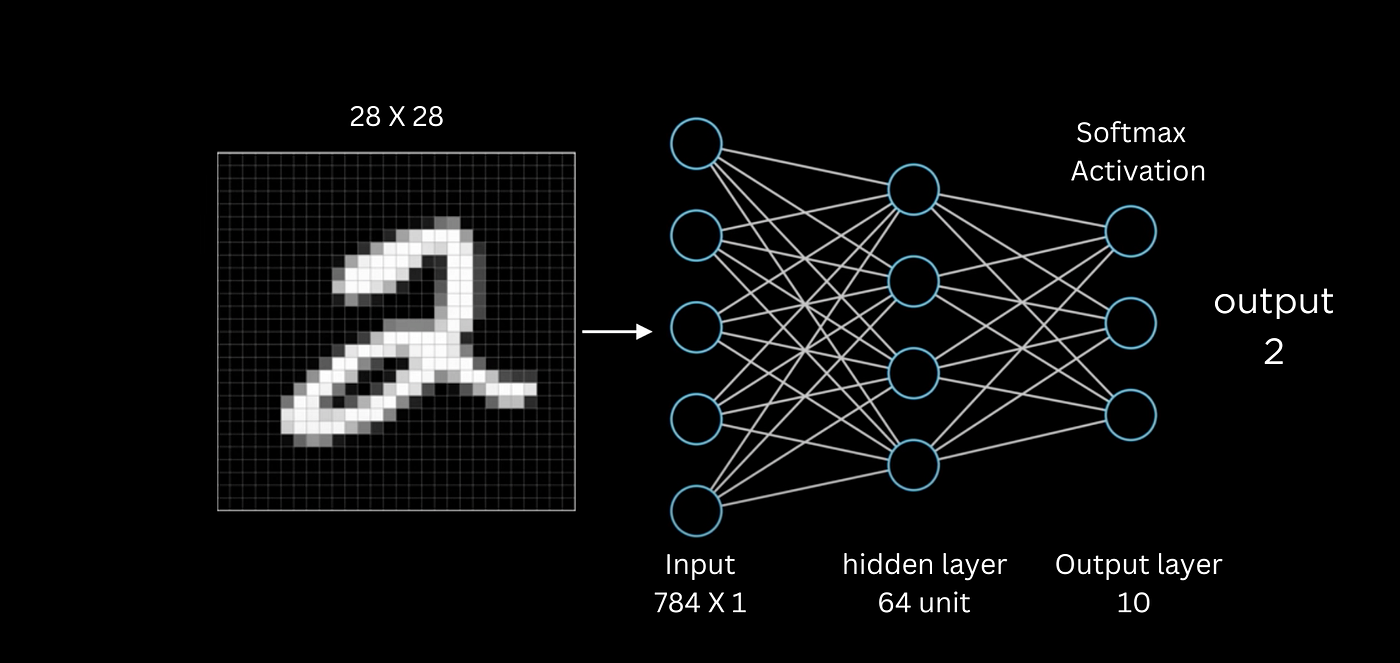 Figure 4. A general neural network setup for MNIST handwritten digit classification, emphasizing the input and output layers (Khare, 2021).
Deep learning, broadly encompassing CNNs, has consistently delivered state-of-the-art results. The specific configuration (number of layers, filter sizes, activation functions) can be optimized for marginal gains, but the core principle of deep, convolutional layers for feature extraction followed by fully connected layers for classification remains dominant. For extremely high performance, ensemble methods combining predictions from multiple diverse models can sometimes surpass single-model performance, but at increased complexity.
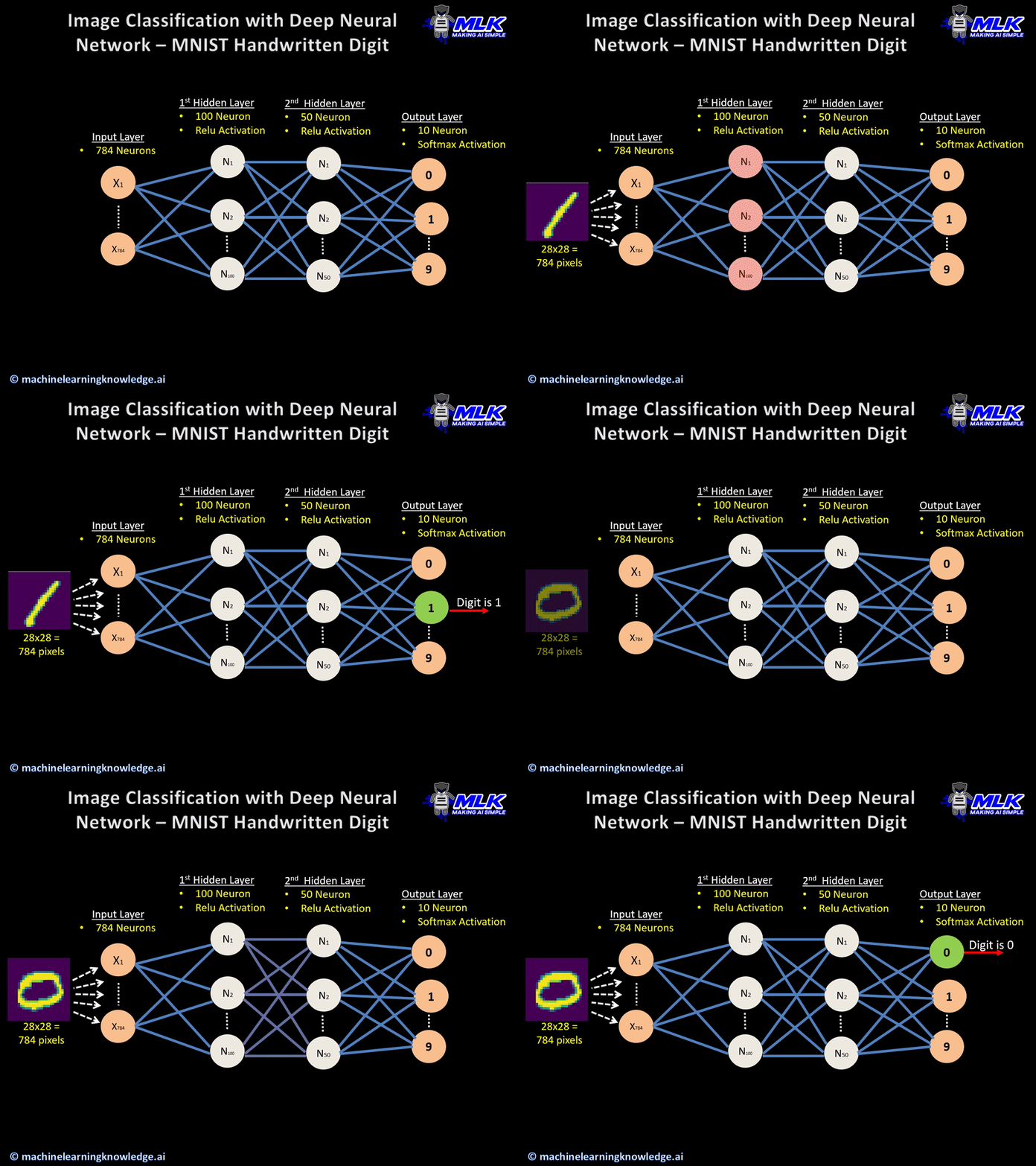 Figure 5. A visual representation of a deep neural network processing MNIST handwritten digits, highlighting the multi-layered structure (Kumar, 2020).
In conclusion, while simple neural networks can achieve good results, deep CNNs are the gold standard for digit classification due to their inherent ability to handle image data effectively. The primary challenges now lie in addressing real-world variability and ambiguity, and ensuring robust performance across diverse, unconstrained handwriting styles.
Bibliography
Analytics Vidhya. (2017, October 25). Understanding Neural Networks: Hand-Written Digits Classification [Video]. YouTube. https://www.youtube.com/watch?v=i8UVTXN1jlM
Keuninckx, L. (2023). MNIST handwritten digits classification with a recurrent MMV network: A novel approach employing multi-modal variational autoencoders [Figure]. ResearchGate. https://www.researchgate.net/profile/Lars-Keuninckx/publication/369795246/figure/fig2/AS:11431281137782819@1680688453588/MNIST-handwritten-digits-classification-with-a-recurrent-MMV-network-the-network-starts.ppm
Khare, P. (2021, April 1). MNIST (Hand Written Digit) Classification Using Neural Networks. Medium. https://pradyumnakhare.medium.com/mnist-hand-written-digit-classification-using-neural-networks-d227f42c237c
Kumar, P. (2020, June 12). Image Classification with Deep Neural Network (MNIST Handwritten Digits). Machine Learning Knowledge. https://machinelearningknowledge.ai/image-classification-with-deep-neural-network-mnist-handwritten-digits-new/
Ramachandran, D. S. R., & Biswal, P. K. (2023). Hand‐written digits classification with a hybrid neural network model incorporating fuzzy C‐means clustering [Figure]. ResearchGate.
Leave a Reply